
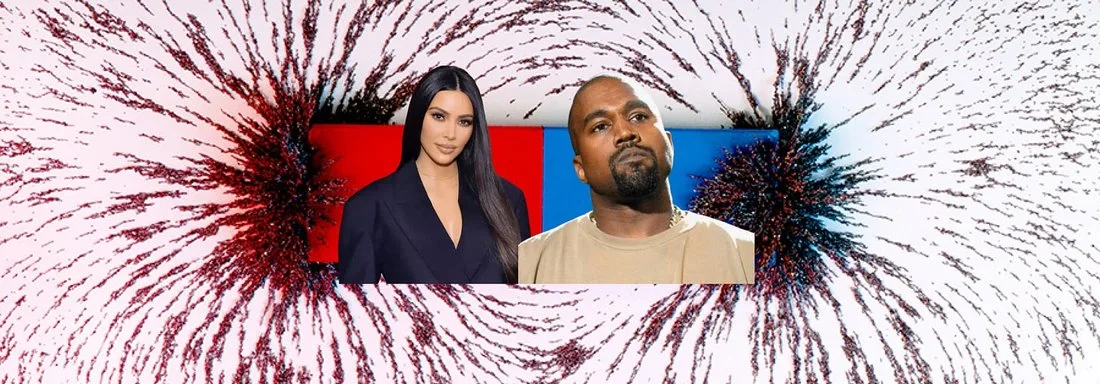
I emailed Packy immediately after reading his first newsletter on Shotcallers vs. Worldbuilders. There was an example he was missing: Kim Kardashian West and Kanye West. They’re the No. 1 Shotcaller and No. 1 Worldbuilder of all time, I said. He should write this in his series, I said. It’s very important, I said. Ray Dalio may have written about ‘Shapers,’ but he hasn’t written about this.
Packy graciously agreed to indulge me. So here we are.
In this edition of Not Boring, I’ll lay out the argument for why Kim & Kanye are each the ultimate reflection of these two opposing strategies: One a Worldbuilder who has challenged convention at every turn, the other a Shotcaller who preternaturally understood the game and played to win.
Kanye as No. 1 Worldbuilder
Since it’s been a few days, let’s review Packy’s definition of a Worldbuilder.
They do three things:
They predict something non-obvious about the way the world is moving before others see it and before the market is ready for their ultimate vision.
They create a wedge into the market and leverage it into a much larger opportunity. The public often ridicules or dismisses the initial wedge product.
They timestamp their vision, whether in public announcements or confidential documents.
Kanye West started with music, first as a producer for others, signing at Jay-Z’s Roc-A-Fella Records in 2002. He released his own single, ‘Through the Wire,’ in 2003.
He found a wedge by focusing on something new: using the human voice as the ultimate instrument. It can be mixed, chopped, and produced like anything else. Is your mouth wired shut? Just a new sound, a new type of instrument. Next came ‘The College Dropout’ in 2004. It was a hit. At 1 hour and 16 minutes with 21 tracks, ‘The College Dropout’ baffled audiences and won Kanye his first Grammy.
What made it so special? According to Jay-Z, “People’ll give it up for creativity.”
It was different. It resonated.
But creating art is much like building software companies; the ground is always shifting. There's always something new to contend with. Tastes change. Competitors emerge.
This is Kanye's real strength as a Worldbuilder: Since ‘The College Dropout,’ Kanye has never lost his out-front lead. He's kept it up for nearly two decades. “He has proven remarkably, even uniquely, deft at brick-dodging, and part of the thrill of his career has been watching him defy the predictions as to when it was all going to end,” Pitchfork summarized.
Kanye has stayed out in front by ignoring or directly rebuking agreed upon conventions.
His 2008 album ‘808s and Heartbreaks’ highlighted synthesizers and lots of autotune. It was super weird when it came out. Kanye announced “Hip-hop is over for me now,” after that album. “From now on, I want to be seen alongside only the musicians you see in the old black-and-white photographs—Jimi Hendrix, the Rolling Stones, the Beatles.”
The reinventions kept coming. ‘Yeezus’ kind of scared me. ‘Life of Pablo’ was a banger. ‘Jesus is King’ is a gospel album. (Not many people into gospel these days.) There is a two minute Kenny G solo on ‘Use This Gospel.’ (Not many people into Kenny G either.)
These are three of my favorite albums of all time. Innovation, innovation, innovation.
Kanye isn’t afraid to ask, why does music have to sound good? What does good mean? (It means boring.) He even considers his most popular albums to be his worst.
“I always felt like ‘Power,’ was my weakest first single that I ever had,” he says.“I always do the songs that people never heard before. But you had actually heard ‘Power,’ before.”
After shoving a wedge in music, Kanye applied the same upside-down thinking to new verticals:
Fashion: Why shouldn't our sneakers look like spaceships? Why notwear a kilt to a concert? (“I felt creative; I didn't feel limited by some perception,” Kanye writes about the infamous kilt.)

Architecture: Why do we live in square houses? How about CIRCLES? (He's building circular homes as part of his project in Cody, Wyoming.)
Music was Kanye’s entry point to building the real vision he’s after: A world without rules.
My goal is to be as close to a five-year-old, or a four-year-old, or a three-year-old, as possible. If a three-year-old says, ‘I like the color orange,’ he's not giving an explanation to an entire world that can give him a thumbs-up or a thumbs-down on whether or not he should like the color orange. I don't care about the thumbs-up or the thumbs-down.
Today, Kanye’s net worth tops $1 billion. He has 21 Grammys. He’s designing a city in Wyoming. He’s growing a church community around his weekly Sunday Service performance. He’s selling a TON of Yeezy sneakers. And he’s still churning out albums.
Kanye’s been dismissed as a bad singer plenty of times. But he’s an exceptional worldbuilder.
As for the ‘timestamp your vision’ bit, Rolling Stone asked Kanye in 2004 why he had “a larger-than-life poster of himself” hung on the living room wall in his New Jersey apartment. His response? “I put me on the wall because I was the only person that had me on the wall.”
Words to live by.
Kim Kardashian as No. 1 Shotcaller
Packy’s definition for Shotcallers is simple: “You win or you lose. Your prediction comes true or it doesn’t.”
Given this definition, Kim Kardashian West is the ultimate shot caller. Her stated goal was simple: To be influential. In 2006, a 25-year-old Kim K told E! News: “I want to do a show.”
Today, after 19 seasons of ‘Keeping Up With The Kardashians,’ Kardashian West is the most influential woman in fashion, beauty, direct to consumer marketing, and increasingly, politics. How many times have you been to the White House to chat with the Don? Fewer than Kim.
Kim worked at winning the influence game for over a decade. Her superpowers are consistency and unwavering brute force, hallmarks of a great Shotcaller.
Even before KUWTK, Kim was playing the game. She organized closets for celebrities in the early 2000s. She followed Paris Hilton around. She did a Carls Jr. commercial. She was a spokeswoman for QuickTrim (whatever that is.) She promoted lollipops. Any opportunity, she took. She kept at it relentlessly.
“2010, 2011 was like, ‘I’ll do anything,’” she says.
It paid off. Listen to what happened when Kim went to promote a milkshake chain in Dubai in the early 2010s:
I go... thinking, Oh, it’s just, you know, some little milkshake store. 250,000 people showed up to the Dubai mall. I had never seen anything like it before. My mom and I looked at each other — because I made her come with me — and we were like, “Holy shit. What is going on? A milkshake place?”
Her playbook is one that every startup marketer is familiar with: Build an audience and sell into it. Content is king. Try things out on social media before you launch a product. Test user feedback, iterate.
She remembers one of her first tweets, posted from a Blackberry:
I realized pretty quickly that social media was going to be used as my marketing tool and my free focus group. It was when I had to design my perfume bottle, and I wanted a pink bottle. Should it be, like, a bright pink or should it be a lighter pink? I couldn’t decide. So I took a picture of each and put them on Twitter and said, “Hey guys, I need you to decide: Which one do you like better?” I got responses and replies for days. It was from people all over the world, and it was all hours of the night. I would write down on a pad of paper a poll or, like, the tally. Light pink won by so much. These are the consumers that are going to be buying it, and they felt like they were involved.
If you’ve used this strategy, you can thank Kim.
2PM’s Web Smith often writes about linear commerce. Kim developed endless spin-off shows each time a new DASH store — her sisters’ retail clothing brand—opened in the mid-2010s. (Kim and Khloe Take New York, anyone? Kourtney and Khloe Take Miami?) I can’t think of anything more linear than that.
By banging away at building a brand day after day, year after year, decade after decade, Kim garnered massive influence. At this point, you might think: That sounds like a Worldbuilder, no?
But Shotcallers and Worldbuilders are differentiated by two things:
The types of problems they want to solve
The way they solve them
Let's compare Kim & Kanye.
Kanye's a purist. He's spent 20 years carefully curating, selecting, crafting, and learning to bring a vision to fruition. He would have never been in a "QuickTrim" commercial.
Kim didn't have a vision. She had a goal. She wasn't out to challenge convention or upend the system; she wanted to win the system. She spent 20 years using one playbook, over, and over, and over: Attract eyeballs, and sell those eyeballs products they like. She sold video games, Kimojis, lipstick, perfume, clothing, appearances at clubs, autographs, partnerships, you name it.
And she’s pretty clear about why she did it. A lofty ambition to change the world? Nope: “It’s always been about working hard and making money.”
Why does that matter?
The problems Worldbuilders aim to solve are nebulous. They build something from nothing; unleash ideas that have never existed before. There’s no guarantee anyone will care about these ideas because no one has cared about them in the past—because they haven't existed in the past. This takes faith. This is how we get visionaries.
Shotcallers tackle things that are black and white. The problems Shotcallers chase are defined: You know the rules of the game, you just need to play to win. This is where we get lots of startups that are ‘Uber for X.’ And SaaS. And IoT. And cloud, and whatever else. It worked once, it will probably work twice. The rules of the game are pretty straightforward.
Still, that doesn’t mean it isn’t extremely hard to win. This game takes grit, determination, focus and endurance.
Fame is like sports, you win or you lose. You have it or you don’t. Kim's concern was winning. And she did.