
Kevin Kwok is on the shortlist of people who write infrequently enough and with so much quality information density that I’ll share everything they write. His latest, Notes on Superhuman’s Acquisition Loops, sounds dry and technical, but it’s packed with wisdom nuggets.
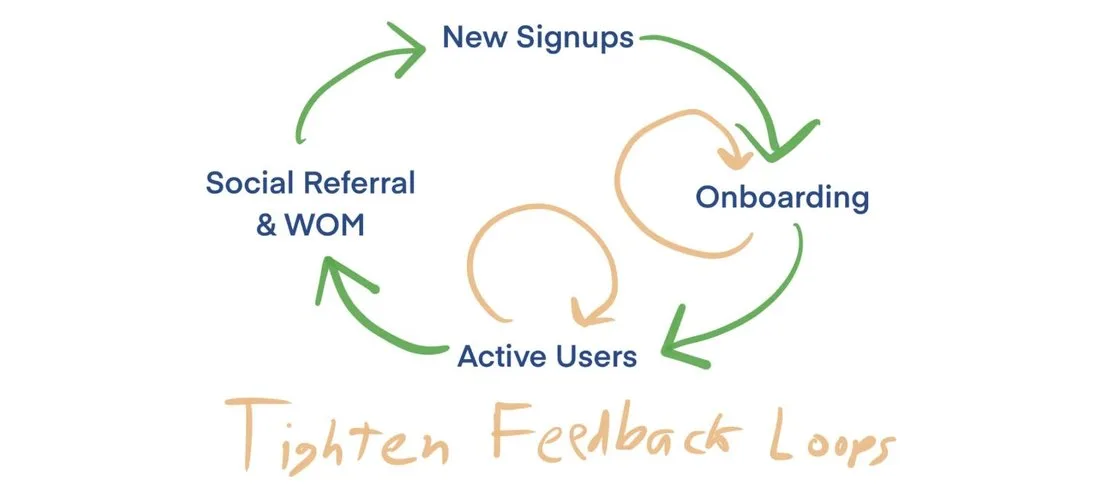
To understand why, we need to start by defining Superhuman’s strategy as simply and succinctly as possible: Prime people to want to use Superhuman, then delight fervent users so that they refer more users.
According to Kwok, everything that Superhuman does is in service of this strategy. Its actions are linked. When the loop works, it works really well, in a way that can't be easily copied by mimicking one or two tactics.
This is what I love about Kwok's writing: whereas most people have tried to cherry-pick lessons from Superhuman (examples here and in the thousands of results here), he examines their discrete actions in the context of a larger loop.
He points out that, “All companies want to delight the users who would be most disappointed to lose the product, but this often comes at tradeoffs with other priorities.” Cherry-picking tactics without making the necessary tradeoffs is useless and potentially harmful. Take, for example, Superhuman’s onboarding.
Superhuman pays a human being to spend at least 30 minutes onboarding every single person who signs up for the product, which creates additional cost for Superhuman and additional friction for the customer trying to sign up. Because the onboarding fits into Superhuman's loop - it creates delight, which causes people to talk about Superhuman, and teaches people to use the product, which creates fervent users, who...talk about Superhuman - it makes sense for them to do. Because Superhuman has shown early success, people think that they can also be successful if they provide white glove onboarding.
But trying to duplicate Superhuman's success by implementing a similar onboarding process without replicating its $0 CAC or reliance on evangelists would be like trying to become Walmart by underpricing all of your competitors without having built Walmart's scale and supply chain. Both will both wreck your unit economics and could kill your business.
Copying part of a strategy is dumb and lazy. I think this is why Web Smith wrote, in The DTC Playbook is a Trap:
There is no playbook. DNVB growth must be a malleable and agile operation. Brands must find opportunities where there were none. They must seek to do what hasn’t yet been done.
I’m going to write more about the importance of differentiation - doing things and building loops that only you or your company can do - over the coming weeks and months. For now, my takeaway from Kwok’s note is:
Don't steal tactics blindly; know thine loop.